Easy Tanghulu Recipe – Chinese Candied Fruit Delight
Tanghulu Recipe (Chinese Candied Fruit) might sound simple, just fruit coated in sugar, but oh, the magic that unfolds with each crunchy bite! This iconic street food from China is more than just a sweet treat; it’s a nostalgic journey for many, a vibrant spectacle of colors and flavors that instantly brings a smile. What truly makes this Tanghulu Recipe (Chinese Candied Fruit) so beloved is its incredible simplicity married with an almost otherworldly texture. Imagin extracte biting through a perfectly crisp, translucent sugar shell to reveal the juicy, slightly tart fruit hidden within – a delightful contrast that dances on your palate. It’s this satisfying snap, the burst of freshness, and the shimmering, jewel-like appearance that captivates everyone, from children to adults. We’re going to unlock the secrets to achieving that perfect, crackly glaze and help you recreate this delightful experience in your own kitchen. Get ready to impress yourself and everyone you know with this easy-to-follow Tanghulu Recipe (Chinese Candied Fruit) that brings a touch of pure joy to any occasion.
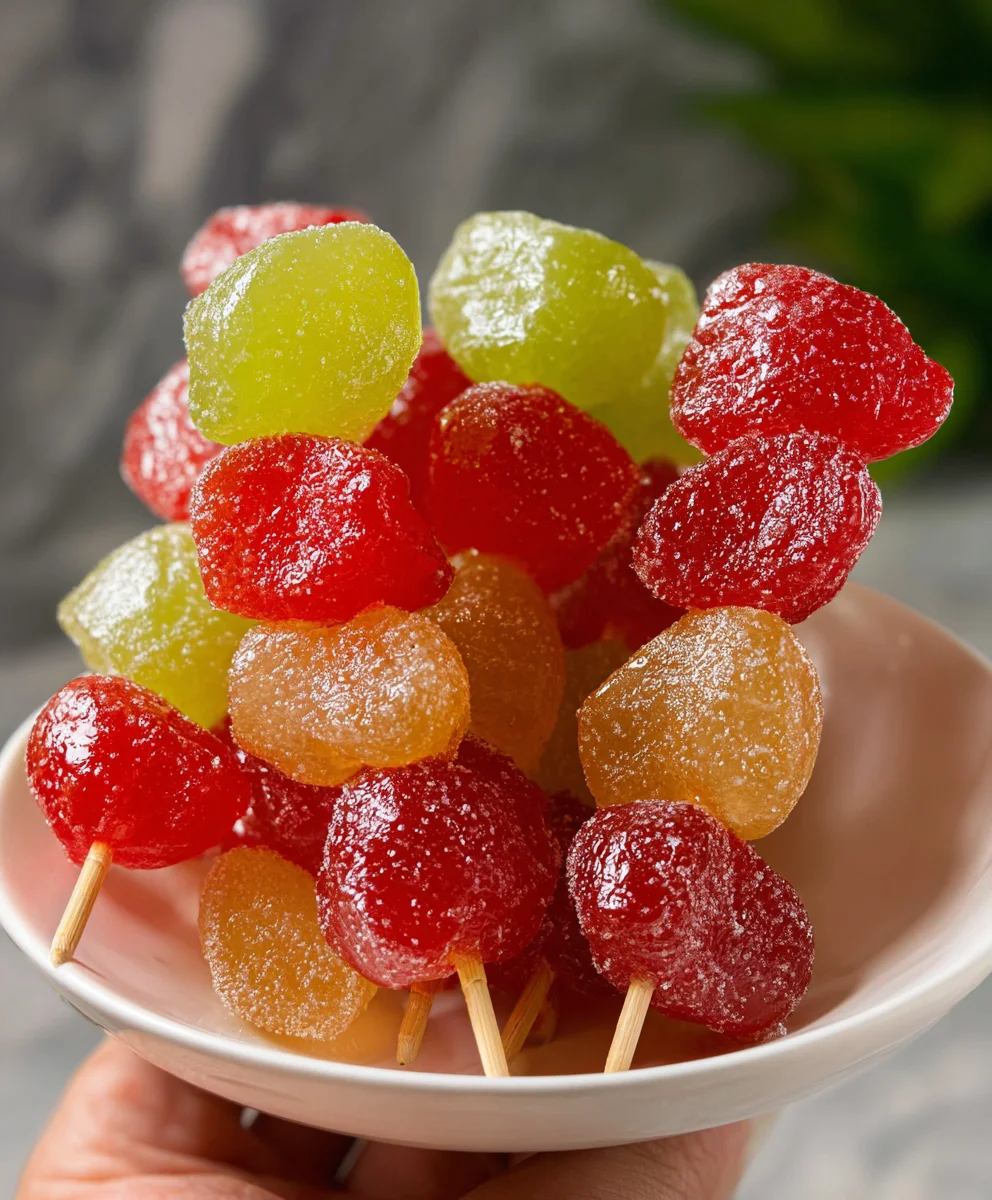
Ingredients:
- 1 lb strawberries, grapes, or other fruit of choice (~30 pieces)
- 2 cups white sugar
- 1 cup water
Preparing Your Fruit
The first step to achieving perfect Tanghulu is selecting and preparing your fruit. I like to use a mix of strawberries and seedless grapes for variety in both texture and flavor. Ensure your chosen fruit is ripe but still firm enough to hold its shape when skewered and dipped. For strawberries, wash them thoroughly and gently pat them dry with a paper towel. If you’re using larger strawberries, you might want to hull them, but keeping the green stems on some can add a charming visual element and make them easier to handle. For grapes, wash them and ensure they are completely dry. Any excess moisture can interfere with the candy coating adhering properly. If you are using larger fruits like melon chunks or pineapple, cut them into bite-sized pieces.
Assembling the Skewers
Once your fruit is prepped and dry, it’s time to skewer them. I recommend using bamboo skewers, which are readily available and easy to work with. For smaller fruits like grapes, you can usually fit about 3-4 grapes per skewer. For strawberries, one large strawberry or two smaller ones per skewer is ideal. Don’t overload the skewers; you want to be able to dip each piece easily into the hot sugar syrup without the fruit touching. Arrange the fruit pieces snugly but not so tightly that they are squished. The goal is to have a nice, even distribution of fruit on each skewer, making for an attractive final product and a satisfying bite. Lay the assembled skewers on a baking sheet lined with parchment paper or a silicone baking mat. This lining will prevent the sticky candy from adhering to your tray and make cleanup a breeze.
Making the Sugar Syrup
Now for the magic: the candy coating. In a medium-sized saucepan, combine the 2 cups of white sugar and 1 cup of water. Place the saucepan over medium heat. Stir the mixture gently until the sugar has completely dissolved. It’s important to stir only until the sugar is dissolved; after that, resist the urge to stir further. Stirring once the syrup starts to boil can encourage crystallization, resulting in a grainy coating instead of a smooth, glossy one. Once the sugar is fully dissolved, turn the heat up to medium-high. You’ll need to monitor the temperature closely. A candy thermometer is highly recommended for this step, as it’s the most accurate way to ensure you reach the correct stage. You’re aiming for a hard crack stage, which is typically around 300-310°F (150-155°C). If you don’t have a thermometer, you can test the syrup by dropping a small amount into a glass of ice-cold water. It should form hard, brittle threads that snap easily. This process usually takes about 10-15 minutes from the point the syrup begin extracts to boil vigorously. Be patient; getting the temperature right is crucial for that signature shatteringly crisp coating.
Dipping the Fruit
This is the most exciting and delicate part of the Tanghulu-making process. Once your sugar syrup has reached the hard crack stage, carefully remove the saucepan from the heat. Let it sit for a moment to stop the cooking process. Working quickly but cautiously, dip each fruit-laden skewer into the hot sugar syrup. Dip them one at a time, rotating the skewer to ensure the fruit is fully coated. You want a thin, even layer of candy. Don’t swirl too much, as this can create uneven patches. The key is to get a quick, decisive dip. You might hear a slight sizzle as the cool fruit hits the hot syrup – that’s perfectly normal. For a thinner coating, you can let excess syrup drip off for a second. If you prefer a thicker coating, you might do a second quick dip, but be careful not to overheat the syrup. It’s important to work efficiently here because the syrup will start to cool and thicken rapidly, making it difficult to coat the fruit properly.
Cooling and Setting
After dipping each skewer, carefully place it back onto the prepared parchment-lined baking sheet. Ensure there’s a little space between each skewer so they don’t stick together as the candy hardens. You’ll notice the candy coating will start to solidify almost immediately. Allow the Tanghulu to cool completely at room temperature for at least 30 minutes, or until the candy shell is firm and brittle. You can speed up the process slightly by placing the baking sheet in the refrigerator for about 15-20 minutes once the initial cooling has begun, but avoid leaving them in there for too long as condensation can make the candy sticky. Once fully set, you’ll have beautiful, glossy, and perfectly candied fruit ready to be enjoyed. The sound of the candy cracking when you take a bite is incredibly satisfying, and the sweet, slightly brittle coating perfectly complements the fresh, juicy fruit inside. Enjoy your homemade Tanghulu!
Conclusion:
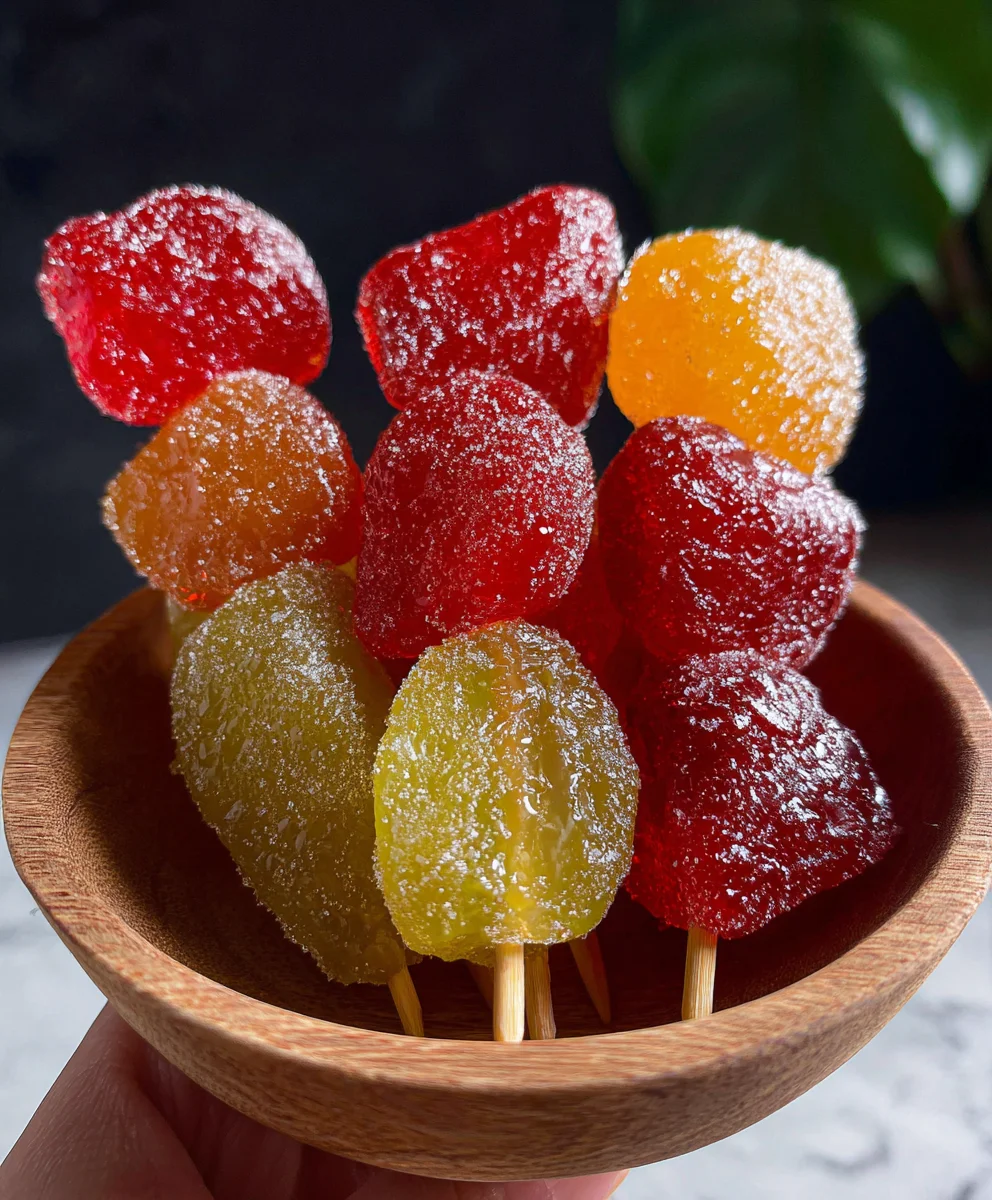
And there you have it – your very own delicious batch of Tanghulu Recipe (Chinese Candied Fruit)! We’ve walked through each step to ensure you can create these vibrant, crunchy treats right in your own kitchen. The beauty of this recipe lies in its simplicity and the sheer delight it brings, both in making and enjoying. The satisfying crack of the hardened sugar coating giving way to the juicy fruit inside is an experience everyone should have.
For serving, Tanghulu are best enjoyed fresh! They make a fantastic dessert, a unique party favor, or a fun afternoon snack. You can arrange them on a platter for a colorful centerpiece that will surely impress your guests. Consider pairing them with a light tea to balance the sweetness. This Tanghulu Recipe (Chinese Candied Fruit) is also wonderfully versatile. Feel free to experiment with different fruits like grapes, strawberries, or even small peeled kiwis. For an extra touch, try adding a sprinkle of edible glitter to the sugar mixture before it hardens, or a swirl of melted white chocolate once the candy coating has set.
Don’t be discouraged if your first attempt isn’t perfect; mastering the sugar coating takes a little practice. Embrace the process and enjoy the delicious results! We encourage you to get creative and make this recipe your own. Happy candying!
Frequently Asked Questions:
Q1: My sugar coating is cloudy and not clear. What did I do wrong?
Cloudy sugar coating can often be a result of stirring the sugar syrup too much after it reaches the boiling point, or if there’s too much moisture. Once the sugar, water, and corn syrup are combined and boiling, resist the urge to stir. Also, ensure your pot is clean, as impurities can affect clarity. If you’re using a candy thermometer, aim for the hard crack stage (around 300-310°F or 149-154°C). Let the syrup boil undisturbed until it reaches this temperature.
Q2: Can I make Tanghulu ahead of time?
Tanghulu are best enjoyed within a few hours of being made, ideally on the same day. The sugar coating can become sticky or melt if exposed to humidity for too long. If you absolutely must make them a bit in advance, store them in an airtight container in a cool, dry place, but be aware that their texture might change slightly. Avoid refrigerating them, as the condensation can damage the crispness.
Easy Tanghulu Recipe – Chinese Candied Fruit Delight
A simple and delightful recipe for making authentic Chinese Tanghulu, featuring fresh fruit coated in a crisp, glossy sugar shell. Perfect for a sweet treat!
Ingredients
-
1 lb strawberries, grapes, or other fruit of choice (~30 pieces)
-
2 cups white sugar
-
1 cup water
-
Bamboo skewers
-
Parchment paper or silicone baking mat
Instructions
-
Step 1
Prepare your fruit: Wash and thoroughly dry your chosen fruit. Ensure strawberries are firm and grapes are seedless. If using larger fruits, cut them into bite-sized pieces. Pat everything completely dry to ensure proper candy adhesion. -
Step 2
Assemble the skewers: Thread the fruit onto bamboo skewers, arranging them snugly but without squishing. Aim for 3-4 grapes or 1-2 strawberries per skewer. Lay the assembled skewers on a baking sheet lined with parchment paper or a silicone mat. -
Step 3
Make the sugar syrup: In a medium saucepan, combine 2 cups of white sugar and 1 cup of water. Heat over medium heat, stirring until the sugar is completely dissolved. Once dissolved, stop stirring and increase heat to medium-high. Aim for the hard crack stage, around 300-310°F (150-155°C), or test by dropping a small amount into ice-cold water – it should form hard, brittle threads. -
Step 4
Dip the fruit: Carefully remove the hot syrup from the heat. Working quickly, dip each fruit skewer into the hot syrup, rotating to coat the fruit evenly with a thin layer of candy. Avoid excessive swirling. Let any excess syrup drip off. -
Step 5
Cool and set: Place the dipped skewers back onto the prepared baking sheet, ensuring they don’t touch. Allow the Tanghulu to cool completely at room temperature for at least 30 minutes, or until the candy shell is firm and brittle. You can refrigerate for a shorter setting time, about 15-20 minutes.
Important Information
Nutrition Facts (Per Serving)
It is important to consider this information as approximate and not to use it as definitive health advice.
Allergy Information
Please check ingredients for potential allergens and consult a health professional if in doubt.